Agri Asia 2026: Exhibition Stall Design Guide
Table of Contents
Agri Asia 2026: Exhibition Stall Design Guide
| Agri Asia 2026 — Quick Facts | |
|---|---|
| Dates | September 11–13, 2026 |
| Venue | Helipad Exhibition Centre, Gandhinagar, Gujarat |
| Organiser | Radeecal Communications |
| Concurrent shows | Dairy Livestock and Poultry Expo Asia, Grainmach Asia |
| Edition | 15th International Exhibition on Agriculture Technologies |
| Best for | Agri machinery, irrigation, seed/fertilizer, dairy & poultry tech brands |
Agri Asia 2026 is set to bring over three days of serious agri-business at the Helipad Exhibition Centre, Gandhinagar — and if you're exhibiting, your booth has one shot to convert footfall into leads. Most exhibitors focus entirely on the machinery they're bringing and treat the exhibition stall design as an afterthought. That's usually the difference between a stall that gets walked past and one that gets remembered.
If you've exhibited before, you already know the problem: crowded aisles, buyers with fifteen minutes to spare, and dozens of competitors trying to say the same thing. In this guide, you will discover how to plan your stall layout, what buyers actually respond to at agri exhibitions, and how to avoid the last-minute fabrication rush that ruins launch day — without hiring three different vendors to get it done.
Krrish Creation is a Gujarat-based exhibition stall design and fabrication company that has built stalls for agri, industrial, and pharma brands across India, Dubai, and international venues, with complete in-house design-to-installation capability.
What Is Agri Asia 2026 and Why Does It Matter for Exhibitors?
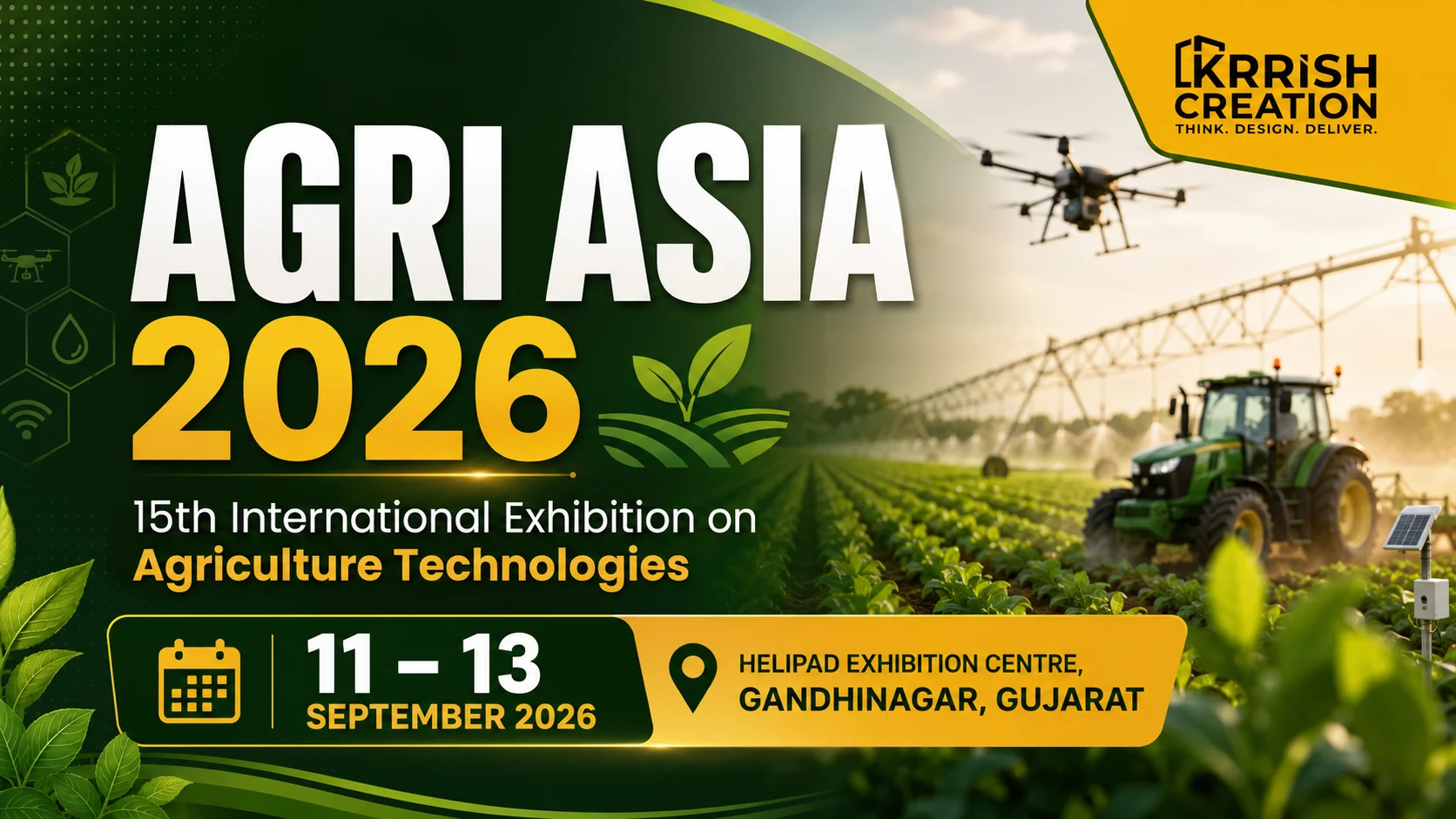
Agri Asia 2026 is the 15th International Exhibition on Agriculture Technologies, running 11–13 September 2026 at the Helipad Exhibition Centre, Gandhinagar, Gujarat. It runs alongside two concurrent shows — the Dairy Livestock and Poultry Expo Asia and Grainmach Asia — under Radeecal Communications.
Agri Asia is India's largest agriculture technology exhibition and conference, bringing together agri machinery manufacturers, irrigation companies, seed and fertilizer brands, and dairy technology providers with farmers, distributors, and institutional buyers. It works by combining three concurrent expos on one show floor, so a single visitor badge covers agriculture, dairy, livestock, poultry, and grain processing. It's most commonly used by agri-tech and machinery brands to enter or expand in the Gujarat and West India market.
Who Exhibits at Agri Asia?
Agritech companies, farm equipment suppliers, seed and fertilizer manufacturers, irrigation specialists, and organic farming brands typically exhibit, alongside dairy and poultry technology providers riding on the concurrent expos.
Who Visits Agri Asia?
Farmers, distributors, cooperatives, agribusiness professionals, researchers, and government agriculture officials make up the bulk of visitor footfall.
Why Does Exhibition Stall Design Determine Your ROI at Agri Asia?
India's exhibition industry is valued at roughly $3.8 billion in 2026 and is projected to grow to $10.04 billion by 2035 (MarkWide Research, 2026) — which means competition on every show floor, including agri exhibitions, is intensifying every year. A stall that looks like everyone else's simply gets lost in that growth.
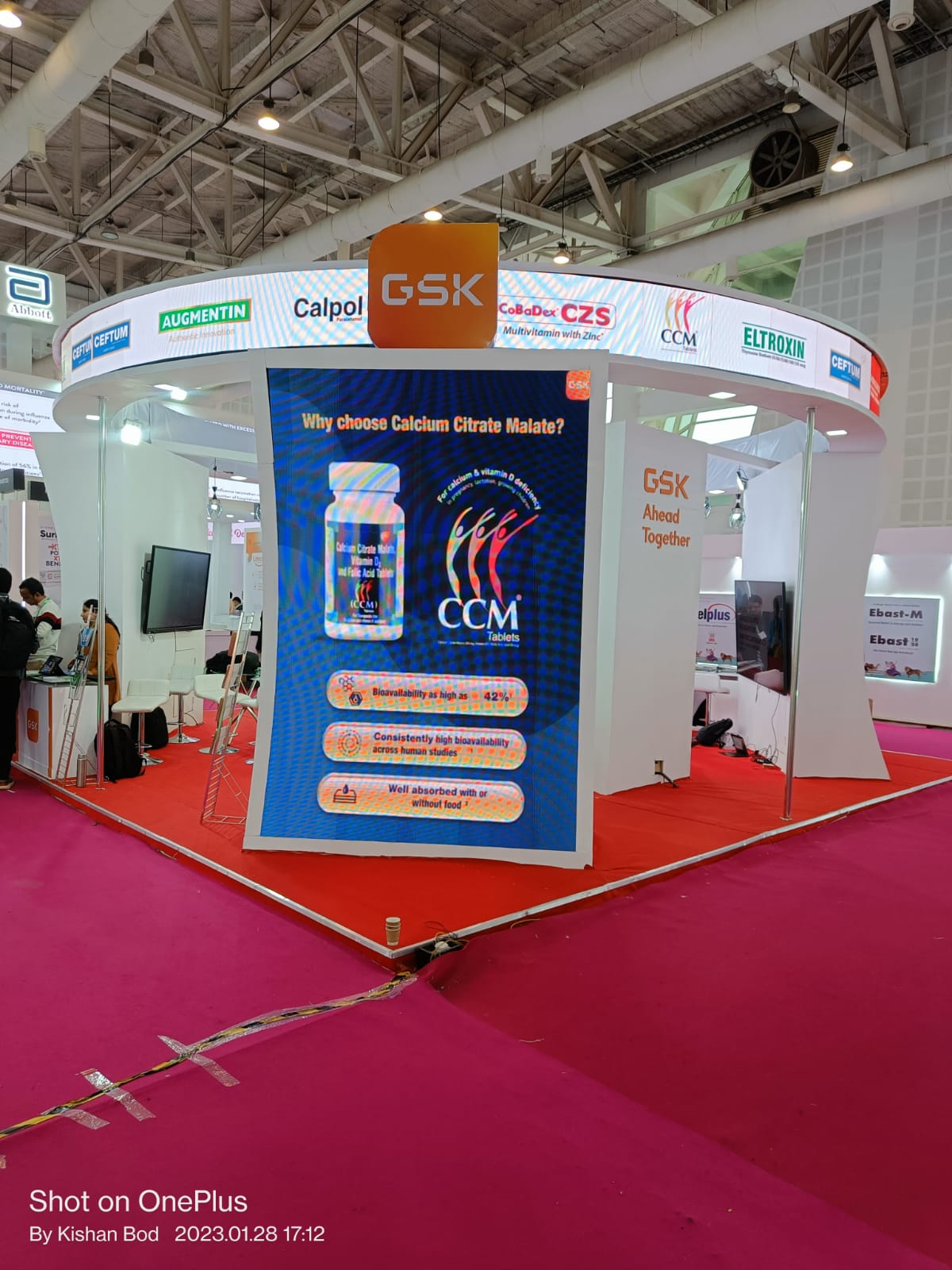
Exhibition stall design is the process of planning a booth's layout, branding, and visitor flow to support product display, demonstrations, and buyer conversations. It works by combining structural fabrication with visitor psychology — clear sightlines, demo zones, and branding placed where buyers naturally look first. It's most commonly used at technical, machinery-heavy shows like Agri Asia, where live demonstrations drive most of the buyer interest.
A professionally planned exhibition stall design isn't decoration — at a machinery-driven show like Agri Asia, it's the difference between a buyer stopping to ask about your irrigation system and walking straight past it.
What Should a High-Performing Agri Asia 2026 Stall Include?
Agriculture exhibitions reward stalls that let buyers see the product working, not just displayed. Since Agri Asia draws farmers, distributors, and dairy/poultry buyers under one roof, your stall needs to communicate its category instantly.
• Live machinery demo zones — operational equipment is the single most effective lead-generation tool at agriculture trade fairs
• Open layout with clear visitor flow — farmers and distributors should navigate your range without confusion
• Heavy equipment display areas — structural design that safely presents tractors, irrigation systems, and farm machinery
• Regional language signage — Gujarati and Hindi branding alongside English significantly increases engagement with farmer visitors
• Integrated lead capture — QR forms and tablet kiosks built into the stall structure for consistent follow-up after the show
How Does Exhibition Stand Fabrication Work for Agri Machinery Brands?
Fabrication is where design turns into a physical, safe, functional structure — and for agri machinery exhibitors, this stage matters more than most, because heavy equipment needs proper floor load planning, safety clearance, and power points for demonstrations.
Exhibition stand fabrication is the construction process that turns a stall design into a physical structure using materials like wood, metal, and fabric panels. It works by combining structural engineering with finishing work — flooring, lighting, and graphics — completed before the venue's build-up deadline. It's most commonly outsourced to specialist exhibition stand fabrication companies rather than handled in-house, since venue compliance and timelines are difficult to manage without local experience.
At Helipad Exhibition Centre, September is a high-traffic exhibition season — multiple major Gujarat trade shows run close together, so fabrication slots and vendor availability get booked out fast.
Should You Book a Local Gandhinagar Stall Fabrication Team, or Bring Your Own?
Exhibitors coming from outside Gujarat often assume they can manage stall setup remotely. In practice, this creates delays exactly when you can least afford them — during the 48-hour build-up window before the show opens.
A local exhibition stall fabrication team is a Gujarat-based contractor who manages design, material sourcing, and on-site installation without shipping delays. It works by handling everything within driving distance of the venue, cutting logistics risk that outstation vendors carry. It's most commonly the safer choice for exhibitors who cannot personally supervise a multi-day installation.
As a full-service trade show booth contractor, Krrish Creation manages design, fabrication, Gandhinagar logistics, on-site installation, and post-event dismantling as one coordinated project — so you're not juggling separate vendors for design, build, and teardown.
Custom vs Modular Exhibition Stalls: Which One Fits Agri Asia 2026?
Not every exhibitor needs a fully custom stall. If you're returning to multiple Gujarat trade shows every year — Agri Asia, Aluminium Bharat, GGJS — a modular system is often the smarter investment.
A modular exhibition stall uses pre-engineered, reusable structural components that reconfigure for different booth sizes across multiple events. It works by standardising panels, frames, and lighting systems that can be resized rather than rebuilt from scratch each time. It's most commonly chosen by brands exhibiting at three or more shows a year to reduce per-event fabrication costs by up to 60%.
| Factor | Custom Stall | Modular Stall |
|---|---|---|
| Best for | Flagship launch, large corner/island plot | 3+ shows a year, repeat exhibitors |
| Cost over time | Higher per event | Up to 60% lower per repeat event |
| Build timeline | Longer — fully bespoke fabrication | Faster — pre-engineered components |
| Reusability | Limited without rework | Reconfigures across floor sizes |
| Brand impact | Maximum differentiation | Strong & consistent, less bespoke |
Our exhibition stall fabrication team builds modular systems that reconfigure across different floor dimensions, so the same investment works for Agri Asia this September and your next show right after.
Quick Decision Guide
• Choose custom if this is a flagship product launch or you have a large corner/island plot
• Choose modular if you exhibit at 3+ shows annually and want cost efficiency without sacrificing brand consistency
Trust & Industry Insight
"Agriculture is the primary source of livelihood for nearly 55% of India's population" (IBEF, 2026) — which is exactly why agri exhibitions like Agri Asia continue to draw such dense, high-intent visitor traffic year after year.
In our own project experience across Gujarat trade shows, exhibitors who lock in their stall design at least 6–8 weeks before the show consistently get better fabrication slots, cleaner installations, and zero last-minute compromises — compared to those who start planning 2–3 weeks out and end up settling for whatever materials are still available.
Conclusion
Agri Asia 2026 gives agri machinery, dairy, and poultry brands direct access to Gujarat's densest agricultural buyer base — but only if your stall is designed to earn attention on a crowded floor. Prioritise live demo zones, plan for heavy equipment safely, and lock in your exhibition stall design and fabrication partner early, since September is peak season at Helipad Exhibition Centre. Whether you need a fully custom build or a modular system for repeat shows, the right contractor turns your booth into your best salesperson on the floor.
Ready to plan your Agri Asia 2026 stall? Get a free quote from Krrish Creation and see our full exhibition stall portfolio before you book. Also check our upcoming trade shows calendar for other Gujarat exhibitions we're covering this season.
About the Author: The Krrish Creation team has designed and fabricated exhibition stalls for agri, industrial, pharma, and consumer brands across India, Dubai, and international venues, managing 100+ stall projects end-to-end from 3D design through on-site installation.